
Available records do not support a definitive inventory of Dimraeth AI use. They show a real community dispute, player allegations about dialogue or voices, a third-party report about a changed store disclosure, and repeated second-hand claims that some material was temporary. They do not include a current developer statement, an archived before-and-after store disclosure, production records, credits that identify tools, or a verified list of affected assets.
That means the honest answer is narrower than either side of the argument may want: concern exists, but the scope, workflow and current replacement status remain unverified here. Players deciding whether to buy should distinguish direct documentation from visual impressions, streamer commentary and statements repeated without a primary source.
Dimraeth AI evidence status
| Claim | Available support | Current status |
|---|---|---|
| Some players believe dialogue or voices use generative AI | Steam and Reddit discussions contain those allegations | Confirmed as a community concern, not as proof of production method |
| A store disclosure was changed or removed | A third-party report makes that claim | Not independently verified in the available records |
| The developer described some material as placeholder content | A streamer says the developer mentioned placeholders | Second-hand and insufficient to define what, when or whether it was replaced |
| The game currently uses AI-generated voices | One reviewer asks for optional AI voices, while other players allege AI use | Contradictory context; no reliable inventory establishes current voice scope |
| Character art or dialogue can be identified as AI by appearance alone | Streamers and commenters offer impressions | Appearance and writing quality are not provenance records |
| Every disputed asset will be replaced before final release | Community discussion implies that possibility | No public commitment or schedule confirms it |
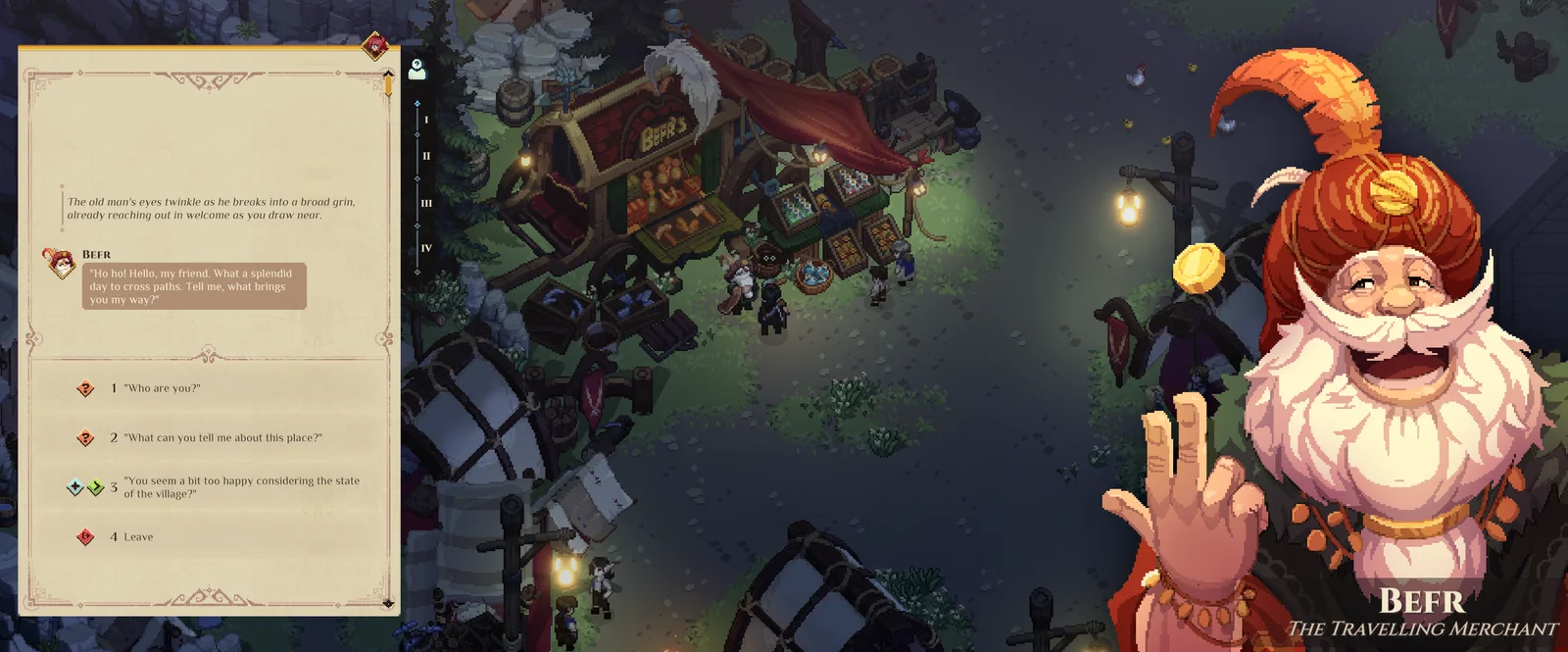
This pre-Early Access dialogue image shows the visible conversation interface. It cannot reveal how the text or art was produced, so it should not be treated as provenance evidence.
Direct evidence and indirect evidence
Direct evidence for a production claim would include a current platform disclosure, a named developer statement, a changelog that identifies replaced material, credits, a source file history or another record tied to the asset in question. None of those is available here as a complete, verifiable record.
Indirect evidence includes a player saying that text feels generated, a streamer repeating what developers allegedly said, a visual style comparison, or a third-party article summarizing a disclosure dispute. Indirect evidence can justify further checking. It does not justify converting an allegation into a precise fact such as “all dialogue is generated” or “only placeholder voices were affected.”
The distinction matters because “AI use” can refer to unrelated things. A player might mean generated voice, assisted writing, image generation, translation, code assistance, enemy behavior or simply ordinary game artificial intelligence. The keyword alone does not identify which category is under discussion. Most supplied debate concerns creative production, especially dialogue and voices, but the available record never defines a complete boundary.
Community concern in the evidence
The Reddit material contains a strongly worded objection to replacing voice talent with AI. That post proves that at least one community member objected and believed AI was involved. It does not show the basis for the belief, identify a voice asset or establish whether the post refers to the Demo, an Early Access build or planned work.
The Steam discussion begins with a buyer asking for proof after seeing reviews that mention AI in character dialogue. The wording is useful because it exposes the same evidence problem this page preserves: reviews can repeat a claim before a primary record is located. The available excerpt contains the question, not a definitive documented answer.
A long player stream includes several comments that parts of the game “seem” to use AI and says the developers mentioned placeholders. This remains the streamer's paraphrase. The footage may help identify a moment for further visual checking, but the transcript cannot authenticate the alleged developer statement or establish which assets it covered.
None of that makes the concern irrelevant. It means the responsible description is “disputed and incompletely documented,” not “proven false” or “fully confirmed.”
The voice-acting confusion
One review in the evidence asks for voice acting because the reviewer finds the dialogue heavy and tiring to read. The reviewer says optional AI-generated voices would be acceptable to them if professional voice work is too expensive. That is a personal suggestion for a future or alternative feature, not proof that the reviewed dialogue already has AI voice acting.
Other commenters speak as though AI voices are already part of the project. The supplied excerpts do not reconcile those positions. They may refer to different builds, different assets, removed material or simply different assumptions. Without a build number and a named scene, combining the statements would create a false certainty.
For players sensitive to generated performance, the practical test is specific: identify whether the current installed build actually plays voiced lines in the scene being discussed. If it does, record the character, line, language and build. Then compare that concrete asset with a current disclosure or developer statement. A general comment about “AI voices” cannot replace that chain.
Writing claims and their limits
Players also criticize the amount or quality of dialogue. A writing judgment is not proof of authorship. Repetition, awkward phrasing, long exposition and inconsistent tone can result from many editing conditions, including ordinary human drafts, localization or unfinished Early Access text.
The Dimraeth romance and relationship guide explains the visible conversation and relationship context without assigning an undocumented production method. That separation is deliberate. The game mechanic can be described from what players can see; the origin of the prose requires different evidence.

The character-creation screen is a verifiable game asset, but the image alone cannot establish which production tools were used.
If a claim specifically concerns writing assistance, useful documentation would identify the tool or method, the stage at which it was used, the human editing process and the content scope. The available documentation does not provide those details. Avoid turning a general platform label—if one existed at a particular time—into a sentence-by-sentence attribution.
Image and character-art claims
One streamer reacts to a character image and calls it AI generated. That is an impression inside an unscripted stream, not a forensic result. The excerpt does not identify the source asset, show its metadata or provide a developer confirmation.
Visual artifacts can motivate closer inspection, but style judgments are especially vulnerable to confirmation bias. Pixel-art conversion, compression, scaling, early concept work and inconsistent hand-drawn details can all look unusual. The absence of an obvious artifact also would not prove a fully human workflow.
Use image claims only when the specific asset can be named and matched to a documented source. This page does not label any current Dimraeth character art as generated because available records cannot support that label.
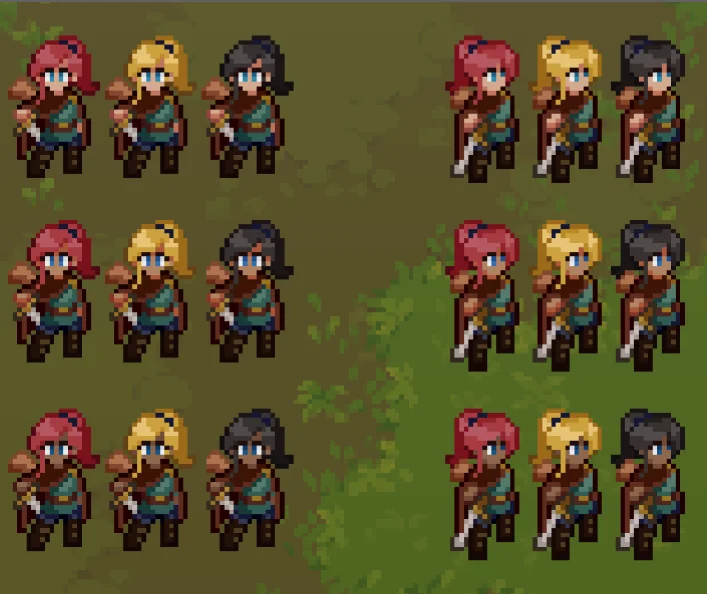
Character sprites can be inspected as visible output; their style is not proof of authorship or tool choice.
Store-disclosure claims
A third-party report says a disclosure about AI voice acting was silently removed from the Steam store page. The available record includes the article's assertion but not an archived earlier store page and a current page shown side by side. It also contains other information that conflicts with documented launch facts, which makes independent verification more important.
A reliable disclosure comparison requires at least four pieces:
- The exact store wording before the change.
- A timestamp or archive record for that wording.
- The exact wording after the change.
- A developer or platform explanation if one exists.
Without that sequence, this page can report that a publication alleged a change, but it cannot establish what changed or why. It also cannot infer that removal means all relevant material was removed from the game. Store text and build contents are separate records.
Placeholder claims
The word “placeholder” is central to several community defenses, yet the evidence never defines it. A placeholder could be temporary audio, temporary portrait art, draft dialogue, a prototype icon or another asset. It may remain in one build after replacement work begins elsewhere. It may also be a community interpretation rather than a precise developer label.
For a placeholder claim to be useful, it needs an asset identifier, build context and replacement state. “Some placeholders exist” is too broad to answer whether a player will encounter the disputed material today. “This character's line in build X was replaced in build Y” would be meaningful, but no such record is supplied.
Early Access status makes change plausible, not guaranteed. It is reasonable to expect revisions in an unfinished game. It is not reasonable to promise a particular revision without a documented commitment.
Language also needs to stay attached to any claim. A voice, translation or line of dialogue in one language does not establish the production method used for every supported language. If a player report does not name the language, it cannot support that wider conclusion. The same applies to version: a Demo capture, a preview copy and the public Early Access build may contain different assets.
When comparing reports, group only records that name the same scene, language and build. Two people reacting to different characters are not independent confirmation of one asset. A later capture that lacks a disputed line may show a change, a branching dialogue choice or a different localization; it does not by itself reveal why the content differs. This narrower comparison may feel slower, but it is the only way to turn a broad controversy into claims that can be checked and corrected.
A buyer decision based on values
Some players treat any generative use in a creative product as a firm boundary. Others distinguish temporary work, accessibility, developer size, tool category or the amount of human revision. The evidence cannot make that value decision for you, but it can prevent the decision from resting on an invented scope.
Use the following decision frame:
| Your boundary | Evidence-led action |
|---|---|
| Any generative creative asset is unacceptable | Wait for a current primary disclosure or direct developer clarification before buying |
| Temporary placeholders are acceptable only if replacement is committed | Require a named commitment and affected-asset scope; the available documentation does not contain them |
| Voice generation is the concern | Verify the current build and language rather than inferring from a writing complaint |
| Generated writing is the concern | Look for a current production statement; prose quality alone is insufficient |
| The finished experience matters more than method | Judge visible dialogue, art and performance separately, while acknowledging the unresolved provenance question |
The Dimraeth Early Access content review covers the amount and type of current content. That is a separate purchase factor. A player can enjoy the systems while objecting to a production choice, or accept the production method while deciding the current content is too limited.
A repeatable verification checklist
When new claims appear, use the same short procedure instead of accumulating screenshots without context.
Identify the exact claim
Write down whether it concerns voice, writing, image, translation or another category. Record the character, quest, asset or store text involved. A broad statement about “the game” cannot be tested.
Record the version and date
Early Access assets can change. Note the installed build, capture date and language. A Demo observation should not automatically be applied to a later Early Access build.
Prefer the primary record
Look for a current platform disclosure, a developer statement or a changelog tied to the claim. A community summary may point toward that record, but should not replace it.
Separate observation from origin
“This line is voiced” is an observation. “This line was generated by a named tool” is an origin claim. The first does not prove the second.
Preserve changed wording
If a disclosure changes, retain both versions with timestamps. Avoid relying on memory or an article headline. A before-and-after comparison is what establishes the text change.
Update only the supported conclusion
A statement confirming one voice does not establish every voice. A replaced portrait does not establish the state of dialogue. Expand the conclusion only as far as the evidence expands.
Enemy AI is a separate topic
Some pages use “Dimraeth AI” to describe enemy behavior, combat patterns or a supposed world-simulation system. No developer specification for an AI framework with that name is available here. A third-party phrase cannot establish a formal game system.
Visible enemies obviously perform game-controlled actions, but ordinary game AI is not the same subject as generative production. Players looking for combat help should use the Dimraeth movement guide and build pages, which focus on observable timing, positioning and resources rather than inventing an engine label.
Current conclusion
As documented on September 22, 2026, Dimraeth has an active community dispute about AI-assisted creative work. The public record contains allegations, personal reactions and secondary reporting. It does not contain enough primary documentation to state the current affected asset list, the production workflow, the duration of any placeholder use or the replacement schedule.
This page therefore marks the claim as unverified rather than choosing a side through repetition. A current, specific developer disclosure could change that conclusion. Until then, treat categorical claims—both “no AI at all” and “everything is AI”—as unsupported by the supplied record.