
Dimraeth is a stronger purchase for players who want deliberate action combat, character experimentation and a shared crafting world than for players waiting for a finished, story-led RPG. Its current Early Access release already combines those systems, but the larger advertised roster and future regions are not all playable. Buy for the existing loop; wait if a completed story, broader content variety or a specific future feature is essential to your enjoyment.
This buying guide assesses the current release and published player impressions. The main tradeoff is consistent across the published impressions: combat and character systems attract praise, while dialogue, repeated encounters and the unfinished breadth can limit the experience. There is no single score that resolves those differences for every player.
Who is most likely to enjoy the current game
Dimraeth suits a player who wants to alternate between fighting, improving a character, gathering materials and developing a home world. The systems are connected, so enjoying only one part of that loop does not necessarily mean you will enjoy the rhythm between them. A combat-focused player may tolerate the other work; a player who enjoys it can find that work gives expeditions a purpose.
| What you want from an RPG | Current fit | Main compromise to consider |
|---|---|---|
| Deliberate top-down combat | A central part of the available game | Encounters and travel can become repetitive |
| Race/class experimentation | Three races and three classes, with skill trees and attributes | The larger planned roster is future scope |
| Small-group online co-op | Solo or up to eight players | Hero progress and world progress have different ownership |
| Crafting and base development | Present in the current Early Access loop | Extra preparation and inventory work can interrupt combat |
| A polished, complete story experience | Not the safest reason to buy now | Dialogue criticism and an unfinished larger story |
| A long-term content plan | Development plans exist | Timing and final scope remain uncertain |
Combat is the clearest attraction
The official description emphasises committed attacks, stamina management, enemy telegraphs and choosing when to strike, dodge, block or parry. This is a different expectation from rapidly clearing every screen through an uninterrupted attack chain. The player is asked to read a situation and accept the cost of an action.
WAND's Early Access impressions describe a Minotaur Brawler session in which combat was responsive and entertaining. That reviewer found slower attacks easier to block precisely, while repeated enemy attacks made dodging more useful. The useful buying signal is the importance of defensive timing, not a universal claim that one defensive action is best for every enemy.
Watch for the moments between attacks when evaluating footage. If you enjoy positioning, waiting for a safe opening and reacting to a telegraph, the commitment can be satisfying. If those pauses feel like an obstacle between you and the loot, the game's central attraction may be exactly the feature you find tiring.
Build depth matters more than the promotional roster
The current Steam Early Access answer identifies Human, Minotaur and Elf races and Brawler, Mage and Shadow classes. That gives you the present roster to evaluate. Promotional wording about eight races, six classes and forty-eight archetypes describes a broader target, not forty-eight currently playable combinations.
Skill trees, attributes, equipment rarity and upgrades are part of the current game. Players who like choosing a direction, testing an interaction and revising a setup can find value in those existing systems even before another class arrives. Enthusiastic community posts describe build experimentation as a major reason to keep playing.
The attraction should still be judged at the level of choices you enjoy making. A large tree can offer meaningful directions, small incremental bonuses or a mixture of both. WAND's reviewer describes early nodes as improvements to existing statistics, with more substantial abilities farther along. That observation is useful for setting expectations without pretending that every node is a new combat action.
If your idea of character progression depends on finding and equipping entirely different visible weapons, read the race-locked weapons guide first. The racial kit and the equipment system are not the same as a conventional interchangeable-weapon chase. Buying for a system you expect from another RPG is risky when Dimraeth organises that choice differently.
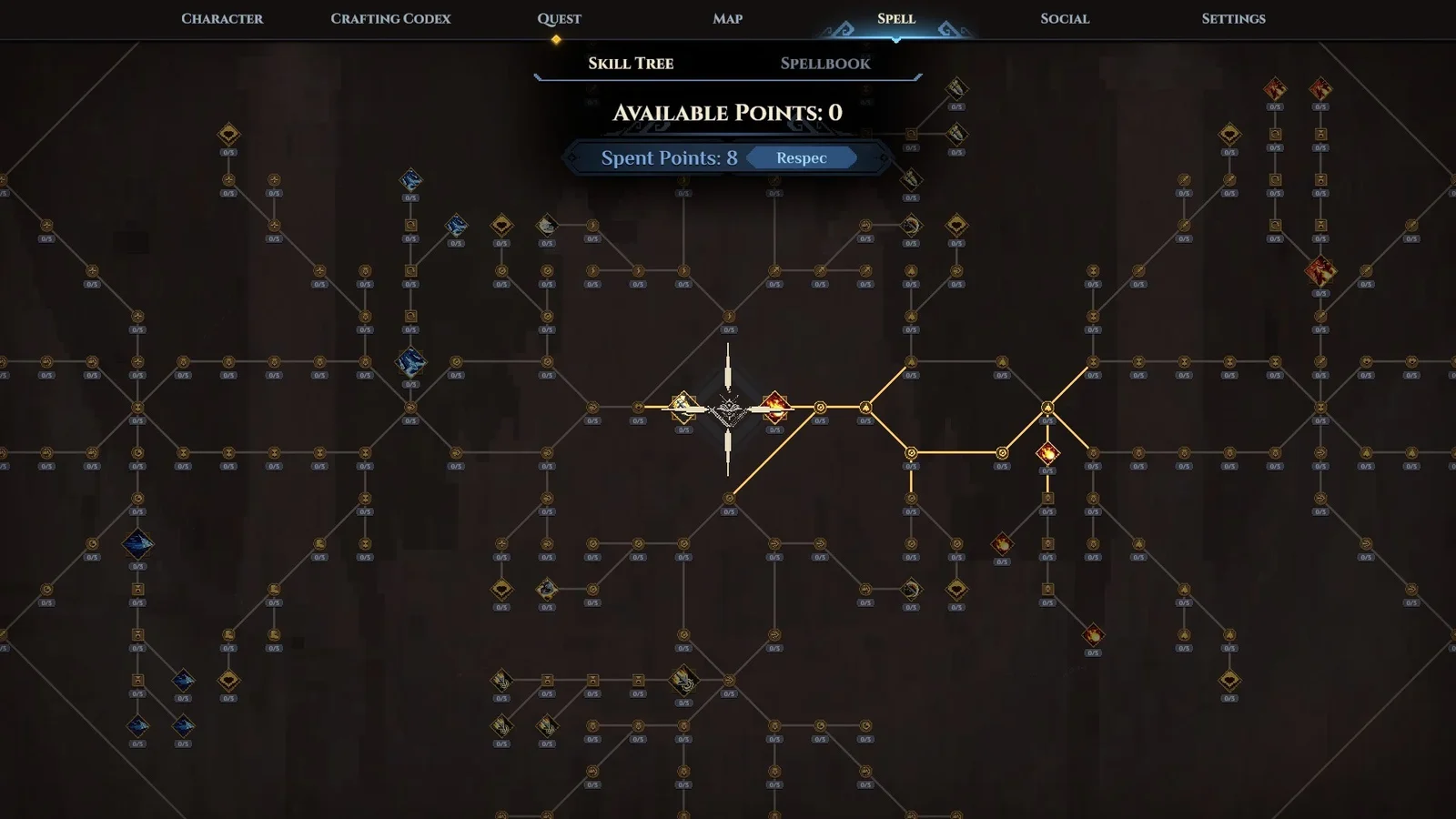
The branching interface shows how character choices connect; node availability can change with updates.
Crafting and base building are part of the rhythm
Crafting, base building and equipment upgrades are already present, rather than a decorative future promise. The game expects expeditions and home preparation to support each other. Gathering a material can lead to processing, crafting or an improvement that changes the next trip.
For a player who enjoys those links, the return home can be a useful change of pace. For a player who wants only combat, sorting and preparation can become an interruption. A positive Steam reviewer explicitly notes that inventory and crafting were not their preferred activities even though they liked the fighting. That distinction is more useful than assuming all fans of action RPGs enjoy a gathering loop.
WAND also raises a broader concern: a game with many overlapping systems needs those systems to remain effective rather than become padding. It is a concern about how the breadth develops, not proof that every system is unnecessary. You can evaluate it by asking whether a visible activity advances a goal you care about.
Look at footage of ordinary play as well as bosses. A short montage can hide the time spent returning to town, reading menus or preparing a resource. If those moments appeal to you, the combined loop may be an advantage. If you already want to skip them while watching, the crafting component deserves more weight in your purchase decision.
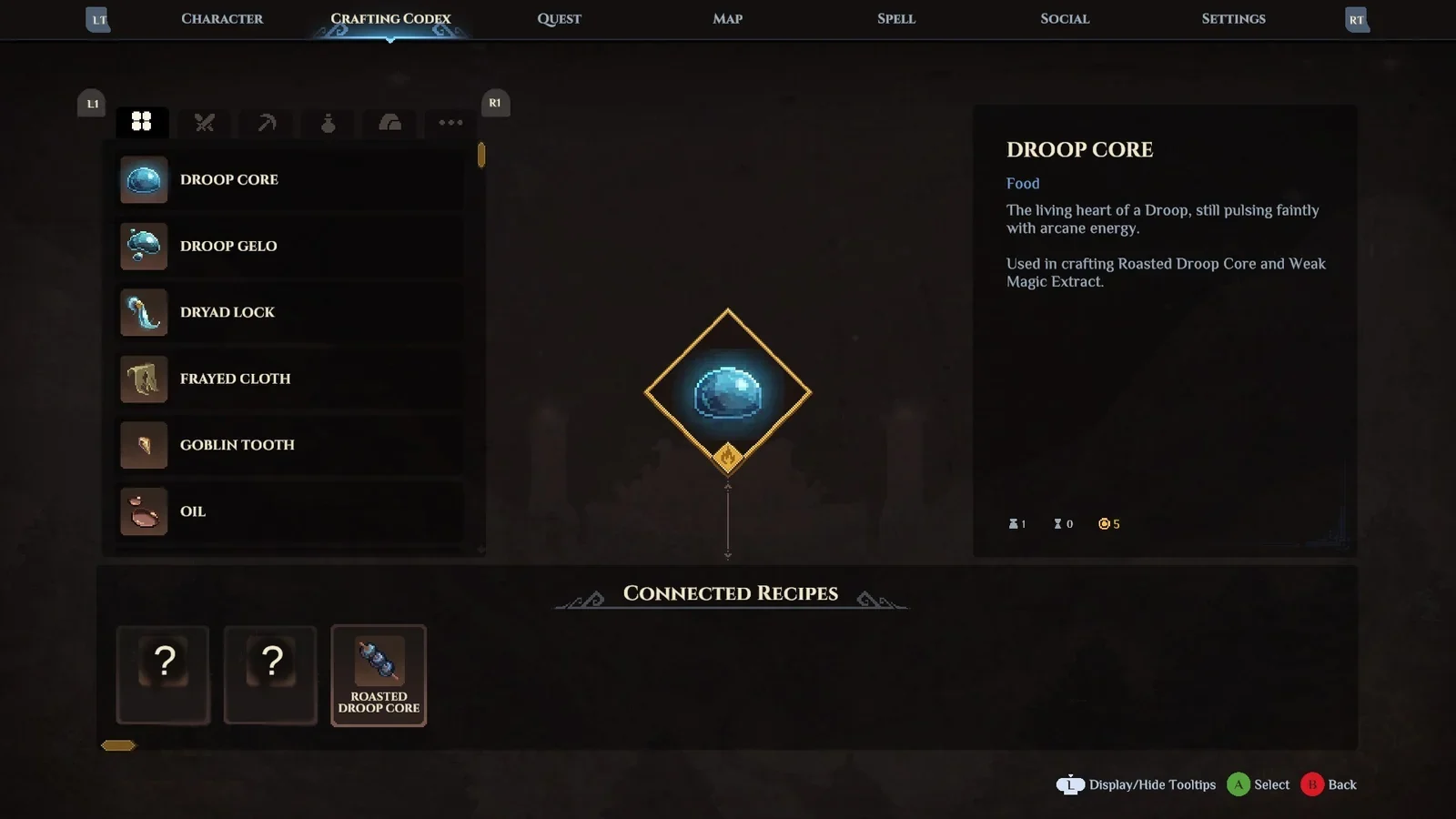
Preparation includes examining ingredients and connected recipes between expeditions.
Repeated enemies can weaken exploration
WAND's impressions praise the combat while finding enemy variety limited during travel. The reviewer describes repeated groups of slimes, then goblins and wolves, with larger groups and unfamiliar bosses producing stronger moments. This identifies an important difference between enjoying a fight and enjoying the route containing many similar fights.
Do not read the handcrafted-world description as a guarantee that every area contains a different enemy problem. The current scope is smaller than the planned world, and adding future biomes is one of the stated development aims. Those plans may address breadth later, but they do not change what a current buyer receives.
Before buying for exploration alone, watch a continuous route through an ordinary area. That gives you a better view of repetition than a trailer assembled from the most dramatic locations. You are deciding whether the current travel and combat rhythm interests you, not whether the art can produce attractive still images.
Dialogue is a meaningful buying concern
Dialogue receives criticism in WAND's impressions and in both positive and negative Steam reviews. The concerns include lengthy exposition, repetitive writing and characters whose conversations do not engage the reviewer. Some players still recommend the game because combat and character systems outweigh those issues; others find the writing prevents them enjoying the rest.
That is a substantial difference in audience fit. If conversations and character relationships are why you play an RPG, weak dialogue can affect the whole experience. If you mainly want mechanical experimentation and are comfortable moving quickly through conversations, you may place less weight on it. Neither preference turns another player's reaction into an error.
Some community criticism alleges AI-assisted writing. Those allegations do not independently establish the complete production process behind the game's dialogue or assets. Keep the observable criticism of writing quality separate from an unverified claim about how it was created. The AI-use evidence guide owns that investigation.
For the buying decision, you can examine the actual kind of dialogue presented without resolving its origin. Watch a conversation at normal pace and decide whether its tone and length suit you. That is a stronger basis for your own enjoyment than treating an allegation as a substitute for reading the game's writing.
Co-op is attractive, with a world-progress distinction
The official Steam description supports solo play or up to eight players in drop-in/drop-out co-op. You do not need a full group to use the game, and you should not inflate the supported party size based on an unusual player report. The current official capacity is the baseline for planning a purchase with friends.
A shared world can make gathering, exploration and character experimentation appealing to players who want a recurring activity together. Positive player accounts describe enjoyable co-op sessions, but they do not establish flawless connections for every host, location or network. No universal connection-quality guarantee is justified here.
A hero's level, equipment, inventory, spells, and personal progression travel between worlds, while story progress, recruited allies, and buildings belong to the world. Agree which world your group wants to develop. The personal-loot guide addresses a separate allocation question; hero portability does not establish how every drop is shared.
Current content and replay expectations
The current Early Access answer identifies the opening route through the Lost Caverns, Earlwood Village and Wildwood Forest, alongside multiple bosses and the working progression loop. Evaluate those available activities before assigning value to the planned larger story.
Community opinions differ on replay value. Some players enjoy developing another character or revisiting repeatable encounters. Others feel the available endgame does not provide enough variety to justify prolonged repetition. Those are useful opposing preferences, not a reliable calculation of how long your own purchase will last.
If repeatable boss content is appealing, ask what would make each return interesting for you: a different setup, a specific equipment goal or playing with another person. If the only reason to return would be reaching unannounced future content sooner, you may be better served by waiting.
Technical expectations before paying
Steam lists Windows requirements, Full Controller Support, Steam Cloud and Steam Deck compatibility marked Playable. Those are useful product details, but they do not amount to a tested performance profile for your machine. Playable should not be rewritten as Verified, and controller compatibility is not evidence of a console edition.
Steam's graphics requirement rows are inconsistent enough that a simple higher-versus-lower comparison is unreliable. The minimum notes say integrated graphics are not supported and specify 4 GB VRAM. If hardware compatibility is the deciding factor, clarify the current requirements instead of assuming pixel graphics guarantee low hardware demands.
Use the download guide for the official installation route and requirement table. If your purchase depends on a native platform other than the current Windows Steam product, check that platform's availability first rather than buying in the hope that a port is confirmed.
Buy for the current release, not an estimated deadline
The developer expects roughly eighteen to twenty-four months of Early Access and explicitly avoids setting a fixed exit date. Planned work includes new areas, character options, later-game progression, bosses, crafting, building and story content. Those plans explain the intended direction; they are not a release calendar or current inventory.
The price is also planned to rise as content and polish increase. The Steam purchase box displayed $21.99 on October 9, 2026. Check your own current price and currency. No next increase amount or date is available here.
Do not let a future price plan override a present mismatch with your preferences. If you would only enjoy the game after a particular feature arrives, buying early does not guarantee that feature's timing or execution. If the existing combat and development loop already justify the purchase for you, the roadmap can be a potential benefit without being the sole reason you paid.
A practical decision before checkout
Watch three ordinary situations: a sustained combat encounter, a conversation and a return home for preparation. Together they reveal more of the purchase than a montage showing only bosses. Then compare the current roster and regions with the feature you most want.
Buy now if you like the committed combat, can enjoy the existing character choices and want to experiment within the current Early Access scope. A small co-op group or an interest in crafting can strengthen that fit, provided you agree on the kind of session you want.
Wait if complete narrative delivery, wider enemy variety or a specific planned feature is essential. Waiting does not require declaring the game bad; it recognises that your requirement belongs to work that is still developing. Your decision should remain understandable even if the next update takes longer than expected.